Connor Boyle
In Many Languages, to "Reign" is to "Righten"
by Connor Boyle
tags: historylinguistics
.jpg)
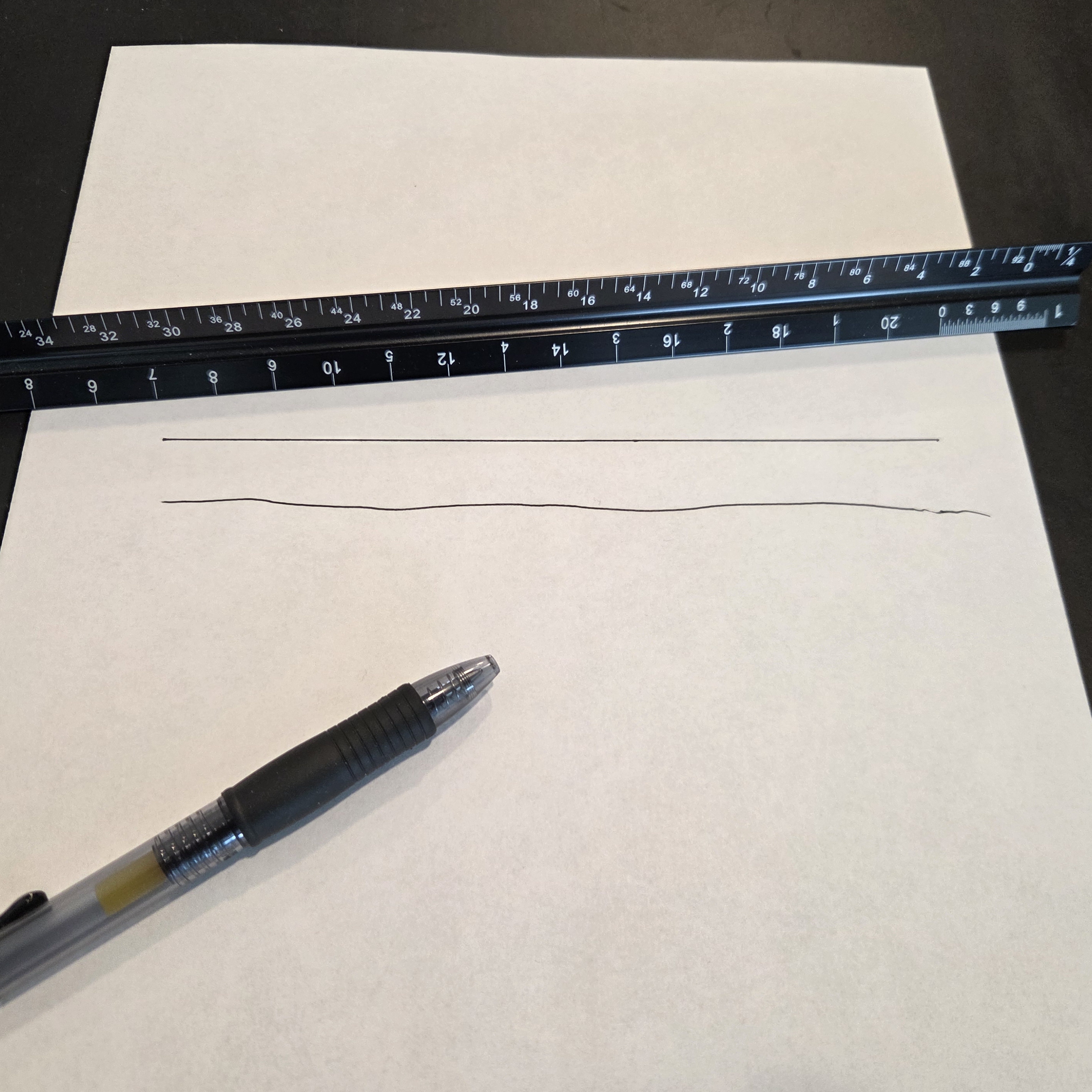
The English word “ruler” can refer to a person who governs a state, or to an object that is famously very straight. (image of King Charles III, courtesy of the Government of the United Kingdom)
An Ancient Aphorism
季康子問政於孔子。孔子對曰:「政者,正也。子帥以正,孰敢不正?」
Ji Kang asked Confucius about government. Confucius replied, “To govern means to rectify. If you lead on the people with correctness, who will dare not to be correct?”
The above is a quite well-known quotation of Confucius, and yet I don’t think I have ever encountered an English translation that quite does it justice. In particular, translations such as Legge’s fail to reflect that the Classical Chinese words translated as “govern” (zhèng 政) and “rectify” (zhèng 正) are homophones—which adds a certain pithiness to Confucius’s dictum.
In an attempt to improve upon Professor Legge’s glosses, I considered several synonyms for “govern” such as “lead”, “command”, and “rule”; I ultimately landed on “reign”. “Reign” and “rectify” already give us a nice alliteration, but the overlap in sounds can be increased even more by swapping “rectify” for “righten”, giving us:
Ji Kang asked Confucius about government. Confucius replied, “To reign means to righten. If you lead on the people with rightness, who will dare not to be right?”
A Contemporary Connection
Now, according to the ABC Etymological Dictionary of Old Chinese, it is not merely by coincidence that the words for “reign” and “righten” (Old Chinese *tsjäŋ 政 and *tsjäŋ 正, respectively) are and were homophones; these two words were in fact etymologically-related (Schuessler p. 612). More than that, it appears that they were originally one and the same word, whose literal meaning, “righten”, was extended by metaphor to mean “reign”, with the latter sense eventually receiving its own Chinese character (政).
Do the English words “reign” and “righten” have a similar etymological relationship? As it turns out, yes! The English word “reign” comes (via Anglo-Norman French, see the Anglo-Norman Dictionary) from the Latin regnāre (meaning “to rule as king”), a derivation from rēx (meaning “king”), which itself comes (via Proto-Italic *rēg-) from the Proto-Indo-European *h₃rēǵ-s (meaning the same, de Vaan p. 522).
The Proto-Indo-European *h₃rēǵ-s itself comes from the root *h₃reǵ- (Mallory p. 329), meaning “move in a straight line; extend, stretch” (Mallory p. 187). A “king” in Proto-Indo-European was, literally, “one who makes things right” (Anthony p. 160).
The Proto-Indo-European word *h₃reǵtos,1 meaning “right”—also derived from this root—became *rehta- (“straight”) in Proto-Germanic, which became riht in Old English, and finally “right” in Modern English (Kroonen p. 408). “Right” combines with the suffix “-en” to form “righten”, thus completing our millennia-long etymological chain connecting “reign” to “righten”!
flowchart BT
A("*h₃reǵ
'move in a straight line; extend; stretch'")
B("*h₃rēǵ-s
'king'")
C("*h₃reǵtos
'right'")
D("*rehta
'straight'")
E("rēx
'king'")
F("regnāre
'to rule as a king'")
G("reignier
'to reign'")
H("reign")
I("riht
'right'")
J("right")
K("righten")
subgraph Proto-Indo-European
    A == derived ==> B
    A == derived ==> C
end
subgraph Proto-Germanic
    C -- inherited --> D
end
subgraph Latin
    B -- inherited --> E
    E == derived ==> F
end
subgraph Old French
    F -- inherited --> G
end
subgraph Old English
    D -- inherited --> I
end
subgraph English
    G -. borrowed .-> H
    I -- inherited --> J
    J == derived ==> K
end
This metaphor—of a governor, king, or ruler as one who “straightens” a society, its laws, or its people—might seem a bit foreign to a modern reader. Yet, it has re-occurred even in modern English: “rule” can mean “to govern”, or it can mean “to mark with a straight line”, as in “college-ruled notebook”.
References
- Aberystwyth University. Anglo-Norman Dictionary (AND2 Online Edition). https://anglo-norman.net/. accessed 5 September 2026.
- Anthony, David The Horse, the Wheel, and Language: How Bronze-Age Riders from the Eurasian Steppes Shaped the Modern World. Princeton, New Jersey: Princeton University Press (2007).
- Kroonen, Guus. Etymological Dictionary of Proto-Germanic. Leiden: Brill (2013).
- Mallory, J. P., and Douglas Q. Adams. Encyclopedia of Indo-European Culture. London: Fitzroy Dearborn (1997).
- Schuessler, Axel. ABC Etymological Dictionary of Old Chinese. Honolulu: University of Hawai’i Press (2007).
- de Vaan, Michiel. Etymological Dictionary of Latin and the Other Italic Languages. Leiden: Brill (2008).
Footnotes:
-
Kroonen and Mallory differ on how they record this Proto-Indo-European word, with the former giving *h₃reǵ-to- and the latter giving *h₃reǵtos. I am sadly not knowledgeable enough about Indo-European linguistics to know whether this is a disagreement on substance or a mere difference in convention. ↩
Find me on:
Blog posts:
Hosted on GitHub Pages — Theme by orderedlist